Monday, November 12, 2018

Auto Parts dealer New Chief of Kandahar Police;Tadeen claims his brother,Gen Raziq,post as IG Police


 Hassan Khan
General Abdu Raziq turned to be a combination of extremes. In his life Mr Achakzai was disliked by many; but in his death he was revered from an ordinary Afghan to President of Afghanistan – at least publically.
The life and career of Abdu Raziq – who rose from a border boy using push cart for crossing smuggled goods to the position of the General - is also quite interesting.
The entire life of this young man was, no doubt, a true story of hard struggle, raw bravery and deprivation and highlights of successes and failures.
Achakzai; who died with his boots on as a national hero; was the most feared man not only for his opponents but also for government leaders, tribal chieftains and his peers too. Some say the General was an illiterate man. He started to earn at a very young age to feed his family that become refugees when soviet entered Afghanistan.
There are also reports that before buying a handcart to carry goods from Pakistan across the border to Afghanistan, Raziq used to work with his uncle at a Tandoor –baking Afghan breads- at Pakistani border town Quetta. At Tandoor he was tasked to count what locally was known as Afghani Naan or koolchas.
However, the most credible accounts are that General Raziq rose to the position of general - to be envied by many - from a handcart pusher at Chaman-Spin Buldak border.
His main merchandize to be carried across the border in his four wheelers was the wheat flour bags. Large number of young men and boys can still be seen cress crossing the border, even today if one visit any of the border point – may be Torkham or Chaman- facilitating pedestrians both men and women carrying luggages, or even elderly, the patients or the small babies.
Following the fall of Taliban regime in Kabul, Gul Agha Sherzai become governor of Kandahar. He was tasked to prepare a special police for manning the border named as Afghan border police. The future Gen Raziq, then a young man in his late twenties was inducted as a sepoy to watch and guard the border along Spin Boldak.
Here his career begin and by sheer hard work, ruthlessness and shrewdness, Raziq keeps on moving up the ladder. Those who know Raziq, said as he got the position of a Colonel in ABP, without waiting for his orders of his bosses in Kabul, he did not hesitate to declare himself as a full General.
Raziq not only got the highest rank in the security force, but also earned a lot and become the wealthiest man having properties in India, Dubai and reportedly in Turkey. And was now able to feed three wives and a dozen kids along with his extended family of brothers and sisters.
As per local accounts, Raziq was feared by all. His opponents – Taliban- preferred to move towards the northern and western provinces of Afghanistan leaving the southern to avoid wrath of Gen Raziq. But others like high government officers; ministers, elected members of parliament and leading political leaders from Kandahar used to stay in Kabul instead being in Kandahar and abused by the ‘powerful man’ in Gen Raziq.
President Ghani’s powers were tested in recent past when he ordered removing two most powerful persons - the Governor of Bulkh Atta Mohammad Noor and Gen Raziq. Though Raziq by designation was the provincial police chief but practically he was the true ruler of Kandahar.
Atta was considered to be the most powerful man but the president succeeded in removing him and sending his replacement. However, Dr Ghani failed to replace Gen Raziq.
By the time Ghani orders (removing Raziq) reached Kandahar, Raziq appeared on Afghan national media, to remind Ghani – Raziq’s president and top boss – that he can’t remove him from the post because he was not appointed by him (Ghani) but he earned the position by force. And Ghani surrendered.
General Raziq was true in his words that the position of Kandahar chief was earned by him bot given by government. On October 18, General Raziq was killed in fatal attack at governor house compound after surviving scores of suicide attacks. And interestingly, instead of appointing a professional person to head the police in the crucial Kandahar province, President Ashraf Ghani preferred the younger brother of General Raziq, Tadeen to be the new chief of police force.
According to credible accounts, before joining the police force as its top commander, Tadeen was doing his auto spare parts business at Spin Boldak near Pak Afghan border.
Tadeen has neither formal education nor training in police force; however, local influential people preferred him over other professional police officers as head of the force.
These local influential leaders including Gul Agha Sherzai – former governor – believed that by appointing Mr Tadeen they wanted to reward Mr Raziq family for his ultimate sacrifice. However, those opposing the decision believed the act is tantamount to declaring Kandahar police force as personal force of Raziq Achakzai just like the one kept by the Mujahideen commanders in the recent past.
The decision also reflects badly on Afghanistan over all polity and governance structure. The US and international community have invested billions of dollars over the years to build institutions following fall of Taliban regime specially the national security forces of Afghanistan.
Likewise for the last almost 15 years regular elections are held and there is functioning parliament. SO such decisions where the professional forces is handed over to the untrained uneducated heirs manifest the fact that Afghanistan is still far away from being a proper state where governance is done through institutions not powerful individuals.
                                                                 ---------------

Friday, November 9, 2018

Moscow Conference on Afghanistan sans Afghan govt kicks off; US, Taliban in Moscow; an in depth analyses by Hassan Khan


 Hasan Khan
Almost all important nations particularly those having certain stakes in the prolonged conflict of Afghanistan are gathered in the Russian Capital Moscow today (Friday) pondering over finding means for peaceful solution of Afghan war.
Paradoxically, the only party that is missing from the moot –nomenclature as Moscow Conference on Afghanistan – is the Kabul regime.


Why the Afghan government refused to officially participate in the conference is a major question that is agitating minds of the observers of the prolonged Afghan wars.
Some say Dr Ashraf Ghani’s regime might be shy of facing members of Afghan Taliban armed militia who are in Moscow to participate in the parlays. Or the decision is taken to let the US - which has agreed to be among participants- delegates rub their shoulders with the Militia’s members as part of strengthening Zalmi Khalilzad fresh initiatives.
However, Afghan government is believed to have refused to accept the invitation on the grounds that the Russian government did not agree to the Kabul demand of co-chairing the moot with Afghan government.
Talking about difference between the peace efforts initiated by US and the ones spearheaded by Moscow; Afghan president Ghani said; “The efforts of ambassador Khalilzad are supportive. The distinction is that the US always talked, but not negotiated. That principle has been reiterated and reaffirmed.”
While indirectly criticizing the Moscow initiatives, Ghani said; “The model of cooperation regionally is what happened in Uzbekistan, where the conference is jointly co-chaired and we move forward on that basis.”
Uzbekistan along with Afghanistan organized international conference of 20 nations and international organizations wherein Russia and US were participants among other nations; however, then Taliban militia refused to participate and turned down the invitation to attend the meeting.
This is the first time the Taliban militia agreed to attend a Russian-organized conference on Afghanistan. The move, no doubt, underscore Moscow’s growing contacts with the Afghan insurgents group and active involvement of Russia in the conflict-hit Afghanistan.
The conference, which was earlier scheduled in September this year was postponed on the request of Afghan government following objections over participation of Taliban members. In August, Afghan government announced that Afghanistan and Russia would co-chair the proposed future talks in Moscow on Afghanistan’s peace.
On the other hands reports say the Russians did not agree to the Afghan proposal of holding the moot jointly. As many observers believed in that case – co chairing with Afghan government - Taliban would have raised objection and might had refused to participate.
No doubts, reservations of Afghan regime seem to be genuine and according to the commitments of international community that any event regarding Afghanistan anywhere will be led by the Afghan government, however participation would have provided a good opportunity for face to face interactions with the insurgents’ leaders.
 The US – another major stakeholder – was also having such strong objections over this Russian peace project on Afghanistan, however, unlike the Afghan government, Washington agreed to participate.
United States said the decision of participation in Moscow conference had been taken in close coordination with Afghan government.
“The United States believes that all countries should support direct dialogue between the government of Afghanistan and the Taliban to reach an end to the war and we have been clear that no government, including Russia, can be a substitute for the Afghan government in direct negotiations with the Taliban;” said a statement of the US state department spokesperson, while announcing the decision.
As delegates from around twelve nations started gathering in Moscow on Friday, leading Afghan political leaders gathered a day ahead at Afghanistan Institute for Strategic Studies (AISS) in Kabul and criticized Ghani administration for not being serious in bringing peace to the war torn country.
Prominent Afghan political figures which also include former government officials labelled the Kabul incumbent regime as inefficient and unable to ‘achieve any breakthrough in the peace process’ saying government has done nothing towards restoring peace in the country.
Leading political personalities which include former minister of interior Mohammad Omar Daudzai, former national security advisor Rangeen Dadfar Spanta and chairman of National Agenda Ahmad Wali Massoud, expressed displeasure over Russian government move to organize Moscow Conference without agreeing to Afghan government request to share the presidium.

Referring to the Moscow moot on Afghanistan, Afghan leaders reminded the international community of its pledge to support only an Afghan-led and Afghan-owned peace process.
They said though Moscow’s peace meeting is a clear violation of this commitment, however, the interactions are vital for starting confidence-building measures between the warring factions to end the war.
They accused Afghan president Dr Ashraf Ghani for manipulating the peace process for prolonging his power. 
Though lots of hype has been created about Taliban participation, however, this is not the first time that militia are engaging with the power brokers of Afghanistan. The insurgents have already held a number of rounds of direct talks with the United States recently.
Prior agreeing to send delegates to Moscow, the militia spokesperson Zabihullah Mujahid is reported to have said; Moscow gathering does not mean to get engage in any Afghan peace and reconciliation talks.
“Taliban political envoys will attend the meeting but the participation does not mean they will hold talks with anyone. This is a meeting to debate the current situation in Afghanistan.” 
“This conference is not about negotiating with any particular side, rather it is a conference about holding comprehensive discussions on finding a peaceful solution to the Afghan quandary and ending the American occupation,” Mujahid said.
Moscow has invited 12 nations and leading and the Taliban militia members to the meeting along with leading experts on Afghanistan. Afghan government have turned down the invitation; saying the Afghan government officials will not be in attendance, however, Afghan High Peace Council (HPC) will send a delegation to Russian capital.
The High Peace Council which comprises leading politicians, jihadi commanders, religious leaders and elders and tasked to oversee the peace efforts with armed Taliban and other groups- is participating in the conference as independent group nor as government representatives.
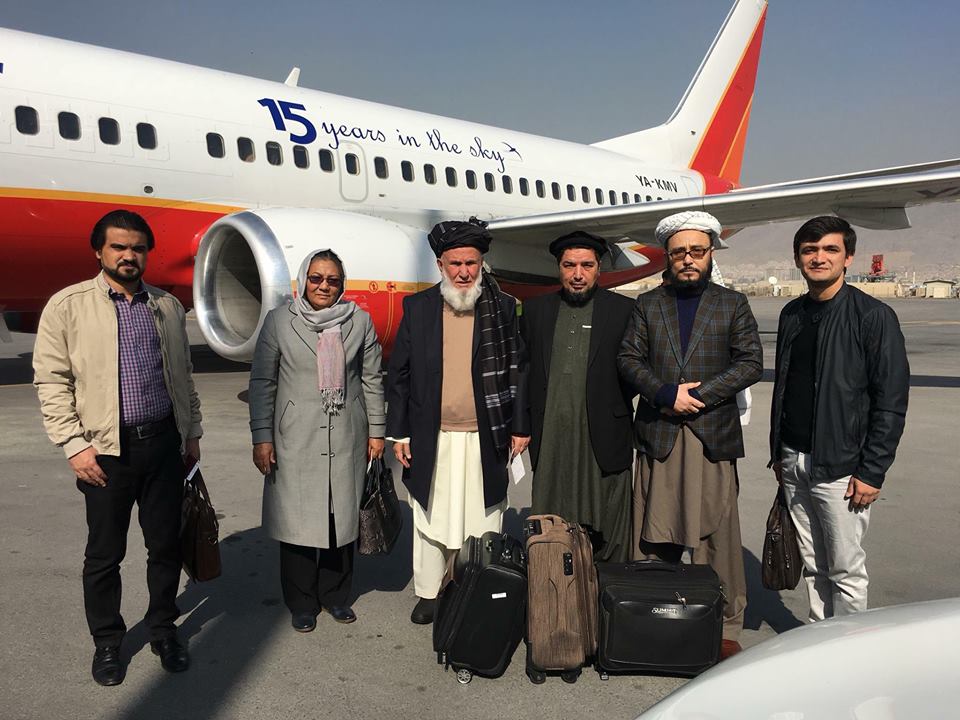
A four members delegation of the PHC led by the council deputy head Haji Din Muhammad and also include a lady member has already left for Moscow. Reports said that the Taliban members had refused to separately hold direct talks the HPC members on the sidelines reiterating their old stance of terming them as “American stooges”.
Russia has also invited some of Afghanistan’s mainstream politicians to the summit and former Afghan president Hamid Karzai and head of the Jamiat-e-Islami party, Attar Mohammad Noor, are participating in the conference.
-------------- ends

Wednesday, November 7, 2018

ANP in trouble; split is eminent; Afrasiab Khattak & Bushra Gohar may quit ANP


Hassan Khan

By issuing show cause notices to two of its senior most leaders, the Awami National Party - ANP - has attracted lots of criticism especially on social media and social and political circles.
Those who knew the nationalist party internal politics believed the show cause notices served on Afrasiab Khattak and Bushra Gohar were long due. Because, both the leaders mostly pursued their independent policies; having mostly divergent positions on a number of important issues not in congruent with party policy.
Referring to the language used in the show cause notices, a loud whispering behind the wall is these notices are enough to be considered as marching orders to both the leaders to ‘quit simply’.

“It depends on replies to these show causes notices,” says a confidant of party president Asfandyar Wali khan. “The likely chances are; both the leaders will call it a day,” he said. ‘If not’ the deed might be concluded by the interpretations of replies to the show cause notices to be submitted within seven days. The interpretation or acceptance of the reply “as satisfactory” will be decided by those who issued the notices.
Awami National Party, is a secular and leftist Pakhtun nationalist political party. It was founded by Khan Abdul Wali Khan in 1986 following the ban on National Awami Party (NAP). Asfandyar Wali Khan, who is the grandson of Bacha Khan, is currently leading ANP as president; while Asfandyar Khan nephew Amir Haider Khan Hoti is the provincial head of the party.
Both Afrasiab Khattak and Bushra Gohar are the party senior most leaders. Khattak remained the party Khyber Pakhtunkhwa president – a most important position in province based party- some three years back while Bushra Gohar is still serving as senior vice president of the party when served with the show cause notice.
Both Khattak and Bushra were long time believed to be very close to the party president Asfandyar Wali Khan. Khattak remained as senator while Bushra Gohar as member national assembly.
However, lately both seemed to have fallen from the grace by annoying or - what one of their senior colleague said – embarrassing the party central leadership on a number of issues by taking different positions to that of the party policy.
Within the party many believed both Khattak and Bushra are aware of the real situation. Both knew which one of their actions created confusions in the minds of the party workers - as referred to in the show cause notices- and when and where they embarrassed the party leadership.
This is not the first time that the nationalist party issued strong show cause notices to the senior leaders. In the past, party insiders say, such notices were also issued to Ajmal Khattak – who remained party central president- Muhammad Afzal Khan Lala and Latif Afridi. These leaders were latter expelled from the party on the bases of the show cause notices.
ANP secretary general Mian Iftikhar Hussain, on November 5, served two show cause notices one on the party senior vice president Bushra Gohar; and other on former senator and senior party leader Afrasiab Khattak. The notices were served on the advice of party central president Asfandyar Wali Khan.
Interestingly, both the notices have, however, not listed the specific acts or statements of Khattak and Bushra wherein violation of party discipline is committed.  In a more general way, the notices said that certain acts of the both the leaders committed in violation of party discipline have caused unrest and confusion among the party workers. Both have been instructed to submit their replies within seven days of the issuance of these letters.
As the notices did not specifically mentioned, are referred to the specific acts committed in violations of party discipline; or statements issued in violation of party policy; so the whole episode led to lot of speculations and rumors within the party ranks and country social political circles.
According to party sources, its known to majority of senior party leadership where and when Bushra and Khattak violated party policy and what are their activities that caused unrest, confusion among the party workers. However, it would have been much better had the show cause notices properly mentioned in detail the ‘undesired’ activities of Khattak and Bushra Gohar.
According to party insiders the actual differences started when Mashaal Khan was lynched to death by an angry mob in Abdul Wali Khan University. Though the party condemned this heinous act, however, resorted to play cautious due to the sensitive nature of the issue especially in Mardan and Swabi.
However, the group led by Afrasiab Khattak which also include Bushra Gohar and few others – known in the party ranks as NGO walas -  remained very much active causing lot of confusion among the party workers vis a vis party ambivalent position on the issue.
Second most important issue where the both the leaders seemed to have embarrassed the party leadership and caused confusion among the workers was the issue of Pakhtun Tahafuz Movement (PTM).
At one time, the party central President Asfandyar wali Khan issued instructions asking both the leadership and workers to distance themselves from PTM activities.
No doubt this decision of the party leadership was criticized, however, majority of the party activists have kept themselves aloof from activities of the PTM – a movement started by youth primarily from tribal areas from the rights of tribal people suffered due to military operations.
But here too both Afrasiab Khattak and Bushra Gohar disregarded the party policy and their leadership instructions. They continued actively supporting PTM activities and its hardline agenda publically leading to lots of confusions especially among the workers who wanted to be part of PTM activities but resisted due to party president instructions.
 Especially on the social media Bushra Gohar and Khattak played as prominent spokespersons for PTM vehemently defending PTM policies and their hardline positions vis a vis the state and security institutions. They disregarded the party policy in this connection, leading to confusion among workers and party activists particularly those sitting on the fences. There are also rumors within the party, that Afrasiab Khattak sb is keeping a strong group with in PTM.
------------------e edns

Fresh Developments on Afghan Front, put Pakistan in fix


 Hassan Khan
Certain recent happenings that took place in the month of October on the Afghan scene are foretelling the changing winds in the region and might likely give new directions to the decades old internecine wars in Afghanistan, definitely, in the near future.
In the first week of October, the American administration formally opened peace dialogue with the Afghan Taliban militia. It’s the first formal acceptance of - by the US administration- Taliban’s long standing position of not talking to Kabul regime whom they called ‘mere puppet’.
In the third week of the same month a strong anti-Taliban police commander - General Abdul Raziq - was killed by a lone shooter, bodyguard of the provincial governor, at a highly secured governor house compound in Kandahar. Majority of the Afghans, including the government leaders, believed General Raziq was one of Afghanistan most effective commander – standing-in as a lone bulwark against Taliban; keeping the militia away from their birth province Kandahar.
This high profile murder of Gen Raziq – known among the Taliban ranks as ‘savage commander of Kandahar’ – that traumatized the entire Afghanistan, was followed by certain concessions for the militia offered by the US administration.
One of these major concessions, the first one that hit the news headlines, was the release of two top Taliban leaders – Mulla Abdul Ghani Barader co-founder of Afghan Taliban Movement, along with another high-ranking militia commander Mulla Abdul Samad Sani. Baradar was arrested from the port city of Karachi in 2010 following reports that Taliban leader had started secret negotiation with then Afghan president Hamid Karzai keeping Pakistan in the dark.
The US also withdrew its long standing opposition to the inclusion of five senior Taliban leaders – released from Guantanamo Bay prison in 2014 - to join the Taliban’s political office in Qatari capital Doha. The induction of these five Taliban leaders into the dialogue team appears to be a significant concession from Washington which was earlier strongly opposing this long-standing demand of Taliban. The five members also include, Mulla Mohammad Fazl - former head of Taliban’s army – and his inclusion in Taliban dialogue team suggested bringing the group’s dominant military wing into the peace dialogue.
The American and Pakistani interlocutors believed that a meaningful peace process in Afghanistan could be pushed further by these concessions as both Mulla Muhammad Fazal and Mulla Ghani Baradar are widely respected with significant influence within the rank and file of Afghan Taliban.
In this nascent peace dialogue between the US and Taliban militia, Pakistan’s major challenge, might be not only to facilitate the dialogue process but also ensure a stable balance of power between Kabul and Taliban militia.
The release of Baradar, a high-profile of Taliban official, released by Pakistani is surely a big step to push the dialogue but the past experience are witness to the fact that the Afghan and US leadership might demand other ‘more steps’ like ensuring success of the process not mere facilitation.
Prior committing anything beyond what is practically possible, Pakistan must keep in view the ambivalent and uncertain Afghan political scene, unreliable American stance vis a vis Afghan insurgency and failures of a number of such initiatives in the recent past. Two major issues – yet haunting the dialogue process- are still likely be; the sincerity of US to engage Taliban, and the readiness of Taliban to ultimately reach at a final agreement with Kabul leaders.
In the past we observed that any peace initiative between Afghan Taliban and Kabul regime remained always prone to deadly terrorist attacks in any of Afghan cities or Kabul. If happened, such incident will likely led to reversal of the process at any stage as Afghan government proved such knee-jerk behaviors culminating on leveling allegations on Pakistan.
Pakistan shall also keep a vigilant watch on the developments especially in Kandahar following the murder of General Raziq – as ordinary Afghans have got more suspicious about the future role of Washington likely alliance with Taliban militia in the region. Additionally, the behavior of Afghan leadership of resorting to allegations against Pakistan for averting major criticism or political backlash of terrorist incidents. The body of slain commander Gen Raziq was not yet buried when Afghan president Dr Ashraf Ghani asked Pakistan to take action against the handlers of ‘lone Shooter’ whom, Ghani claimed, was in contact with across the border in Chaman town of Pakistan.
US also promptly followed Ghani’s footsteps the Secretary of State Mike Pompeo threatened Pakistan of dire consequences if actions not taken against “elements’ across the border.
 "…..our expectation is that Pakistan will not provide safe harbor to terrorists on their western border….We couldn't make that message any more clear and that Pakistan will be held account if they don't see about it... If they're not sincere in that effort” Mike Pompoe warns Pakistan following Kandahar incident.
Moreover, Afghans are largely suspicious in the dubious circumstances where in their highly revered anti-Taliban police commander - General Raziq Achakzai turned out the sole target of the alleged insider in the presence of top military of commanders of Resolute Support Mission (RSM).  
The prime question is how the Taliban alleged ‘insider’ aimed only at Gen Raziq; sparing a much bigger target – Gen Scott Miller - standing close by the victim in the same compound. According to the existing security protocol; in Afghanistan where the top US or NATO commanders are present, the entire security of the area rest with US/Nato troops – due to fear of insiders attacks. Then how can an intruder get so close to his target in a high security zone breaking a number of security layers?
Gen Raziq was standing like a rock in Taliban’s way and his removal from the scene is seen to be a conspiracy or part of the US-Taliban future plan of creating a ‘free zone’ for the militia in Kandahar.
As, besides, releasing senior Taliban prisoners, the militia also demanded ensuring “a free zone” inside Afghanistan for their movements and families.
Islamabad based senior journalist.
---------------